Introduction
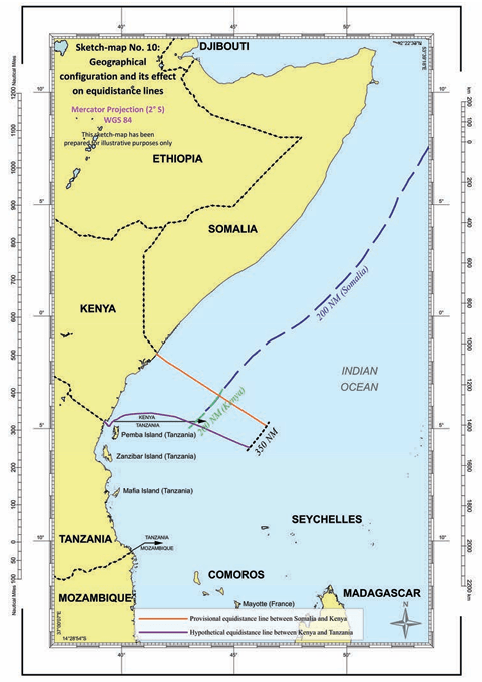
The maritime dispute between Somalia and Kenya concerned a 100,000 sq. km area in the Indian Ocean, rich in natural resources. Somalia initiated proceedings before the International Court of Justice (ICJ) in 2014, arguing that the maritime boundary should follow the equidistance principle. Kenya, on the other hand, maintained that the boundary should extend along a parallel of latitude, based on its historical practice. The ICJ delivered its final judgment on October 12, 2021, largely ruling in favor of Somalia while adjusting the boundary for equity.
Background of the Dispute
The conflict emerged from differing interpretations of maritime boundary delimitation principles under the United Nations Convention on the Law of the Sea (UNCLOS, 1982). Somalia asserted that the maritime boundary should be drawn using equidistance, a method commonly used to achieve equitable division. Kenya, however, argued that it had exercised jurisdiction in the contested area for decades, supporting its claim to a parallel of latitude.
Kenya also contended that a memorandum of understanding (MoU) signed in 2009 constituted an agreement to resolve the dispute through negotiation rather than litigation. Somalia, however, challenged the validity of this MoU and maintained that no binding agreement existed.
ICJ Judgment and Legal Reasoning
The ICJ ruled in favor of Somalia, rejecting Kenya’s claim of a parallel of latitude. The court applied the following legal principles:
- Equidistance as a Starting Point
- The ICJ first applied the standard equidistance method, which involves drawing a median line between the two states’ coastlines.
- Relevant Circumstances Test
- The court assessed whether any geographical or historical factors required an adjustment to the equidistance line. The ICJ found no compelling reasons to apply Kenya’s parallel of latitude argument.
- Equitable Adjustment for Proportionality
- Although the court largely adhered to equidistance, it made slight adjustments to ensure a fair division of the maritime area.
- Rejection of Kenya’s Historical Usage Claim
- The ICJ found no evidence that Somalia had expressly consented to Kenya’s de facto control over the disputed area.
Key Legal Frameworks Applied
- UNCLOS (1982) – Primary treaty governing maritime boundary delimitation.
- ICJ Jurisprudence on Maritime Delimitation – Established case law, including previous boundary disputes.
- Customary International Law – Recognized principles such as equidistance and proportionality.
Implications of the Decision
- Somalia’s Legal Victory: The ruling largely favored Somalia, reaffirming equidistance as the preferred delimitation method under international law.
- Kenya’s Rejection of the Judgment: Kenya withdrew from ICJ jurisdiction ahead of the ruling and refused to recognize the court’s decision, complicating enforcement.
- Regional Impact: The ruling may influence future maritime disputes in Africa and beyond, reinforcing the authority of UNCLOS principles.
- Resource Exploration: The judgment affects oil and gas exploration rights, as companies may reconsider investment strategies in the disputed waters.
Best Practices for Avoiding Maritime Disputes
- Proactive Diplomatic Negotiations – States should seek bilateral resolutions before resorting to litigation.
- Legal Certainty in Agreements – Clearly defined maritime treaties help prevent conflicts.
- Respect for UNCLOS & ICJ Rulings – Adherence to international legal mechanisms ensures stability in maritime governance.
- Transparent Resource Management – Joint development agreements may be a practical alternative in contested maritime zones.
Conclusion
The Somalia v. Kenya maritime dispute underscores the importance of international legal frameworks in resolving territorial conflicts. While the ICJ judgment provided legal clarity, enforcement challenges remain. Moving forward, diplomatic engagement and adherence to UNCLOS principles will be critical for maintaining stability in maritime boundary governance.
Case: Maritime Delimitation in the Indian Ocean (Somalia v. Kenya), ICJ, 2021 161-20211012-JUD-01-00-EN.pdf
 LAW GEMS
Leave a comment